
How often do your patients think about their jaw when they eat? Almost never. Diet is one of the most routine parts of daily life, so the jaw rarely gets a second thought. Yet every meal asks something of it.
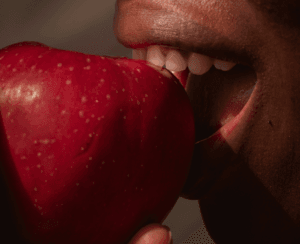
The foods we pick, how often we eat them, and the way we chew all place demands on the masticatory system. For most people, that is no problem at all. But for patients predisposed to temporomandibular disorders (TMD), these small daily habits add up. Over time, they can play a real part in both the onset and the persistence of symptoms.
Occlusion and stress get plenty of attention in relation to TMD. Eating gets far less. And that is exactly where dental professionals can step in. You are well placed to spot the dietary patterns that might be adding strain, then steer patients towards habits that ease the load on the temporomandibular joint (TMJ) and the muscles around it.
Chewing is a repetitive, high-frequency motion, and the forces involved are surprisingly large. Hard, tough, or chewy foods demand more effort and more sustained action. Keep that up, and the muscles tire.
Think about crusty bread, tough meat, crunchy vegetables, or chewy sweets. They all ask far more of the jaw than softer options, and most patients have no idea just how much certain textures demand.
Then there is gum. It looks harmless enough, so it tends to fly under the radar. But frequent gum chewing means the jaw barely gets a break. For patients already dealing with jaw fatigue, that steady low-level loading can quietly make things worse as the day goes on. A meal ends. Gum does not. It can be chewed for hours, pushing the muscles well past what they would normally face.
How patients eat matters just as much as what they eat. Take biting nails or chewing on a pen. There is no food involved, yet the jaw is still hard at work. These parafunctional habits load the system with no nutritional payoff at all. They are usually unconscious, too, which makes them tricky for patients to catch on their own. That is where a quick conversation in the chair really helps.
One-sided chewing is another easy one to miss. Favour a single side, and you create asymmetric loading across the joint and muscles, which can lead to imbalance and localised fatigue.
Why do patients fall into this? Often it traces back to pain or discomfort somewhere else, so the original cause and the resulting strain become tangled together. The takeaway is simple. Find and treat the root of the problem, rather than the lopsided chewing alone.
The make-up of the diet itself can shape how the body copes with discomfort. Diets heavy in processed foods and light on nutrients can blunt the body’s ability to manage inflammation and repair tissue. Diet alone does not cause TMD, of course. But when symptoms are slow to settle, nutrition is worth keeping in the picture.
Caffeine deserves a mention too. A high intake can ramp up muscular tension and, for some patients, feed into clenching. That piles even more onto a jaw that is already working hard. On its own, the effect is rarely dramatic. Sustained over months or years, it adds up.
Pace counts as well. Wolfing down food or taking huge mouthfuls ramps up the demand on the jaw, and patients eating against the clock tend to chew harder. Grazers face a different issue. Snack all day, and the muscles never really get to rest. The fix is refreshingly simple. Slow down. A more considered approach eases the strain without changing the diet at all.
Dental professionals are perfectly placed to spot the habits feeding into TMD symptoms. A few simple chats about food textures, gum, and snacking can prompt patients to make small but meaningful changes. And where jaw function has already taken a hit, the right tools can support rehabilitation.
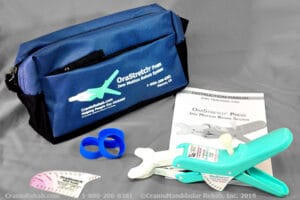 The OraStretch® Press Rehab System from Total TMJ is a practical option for patients with reduced jaw mobility linked to TMD. It supports gradual gains in jaw opening and function through controlled, easy-to-follow stretching. Adaptations cover a broad range of needs too, including edentulous patients, smaller mouths, and those with more limited oral opening.
Eating is unavoidable, and for most patients it leaves no lasting mark on the jaw. For those predisposed to TMD, though, chewing habits, food choices, and parafunctional behaviours can quietly build into real discomfort over time. Help patients join the dots sooner, and you set them up for better comfort and easier management down the line.
For more details about Total TMJ and the products available, please email info@totaltmj.co.uk