
Facial pain follows a seasonal pattern, and it leans towards the colder months. The research is starting to catch up with what plenty of clinicians already notice every January.

Cold weather is thought to raise muscle tension and encourage clenching. The effect looks stronger in colder countries, and stronger still where the difference between seasons is sharply felt.
Sleep shifts across the darker months too, and disrupted sleep is a recognised feature of sleep bruxism. Barometric and temperature changes also appear to influence how patients with sensitive tissues report pain. That goes some way to explaining why some patients describe themselves as weather-sensitive while others notice nothing at all.
Clinically, none of this is out of your hands. It is something you can plan around.
Winter brings behaviours of its own, and most of them are unavoidable. Work deadlines stack up before the holidays. Financial pressure builds, first through Christmas and then through the summer spending that follows it. Family gatherings arrive whether patients feel ready for them or not. None of it happens in isolation, either. The pressures overlap, and the jaw carries all of them at once.
Diets shift as well. Toffee, chocolate, and harder snacks like nuts turn up in far greater quantities than usual, and they ask a great deal more of the masticatory muscles than an ordinary week would.
Routine appointments also get pushed into the new year, so anything brewing over this period goes unaddressed for longer than it otherwise would.
Simple guidance beats complicated guidance, especially for patients new to TMD. In January that gap widens, because so much else in their lives is changing at the same time. Anything that feels like a project will be abandoned by February.
Warmth applied to the side of the face before bed can ease discomfort while they settle and through the night. Softer food for a fortnight is an easy ask. So is cutting back on gum. So is a conscious check during the working day on whether the teeth are touching. None of it costs anything clinically, and all of it goes a long way.
For patients whose opening is genuinely restricted rather than simply uncomfortable, gentle repeated stretching is the approach. Tell them consistency matters more than force. Short, structured additions to a routine get followed. Great lumps of advice do not. A brief review a few weeks on is worth more than a longer conversation on the day, because it tells you whether anything actually changed.
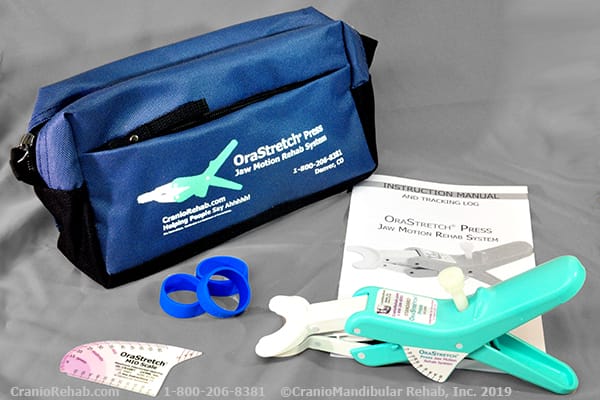
OraStretch is a hand-held jaw rehabilitation system that delivers controlled, repeated passive stretch to the temporomandibular joint and the surrounding musculature. It gives patients a simple, measurable way to work through a home programme.
It is now listed on the NHS Drug Tariff, and can be prescribed by anyone with the registered ability to prescribe. That includes dentists, speech and language therapists, and nurse consultants. For practices that have previously had to refer patients elsewhere for jaw rehabilitation, that care can now stay in-house, with patients managing their symptoms from home.
The seasonal evidence is still early and the mechanisms are still being argued over, so none of these changes how TMD is diagnosed. What it changes is what you expect to see walking through the door in the first weeks of the year.
Ask the question before the patient raises it. Flag it before the practice closes for Christmas rather than after it reopens. And have something ready for the moment reassurance is not enough.
For more details about Total TMJ and the products available, please email info@totaltmj.co.uk