
 Jaw pain has a huge impact on quality of life. It deprives patients of their favourite foods, leads to disrupted sleep, and various mental health disorders are associated with it.[i] Temporomandibular joint disorder (TMD) is a chronic pain disorder and a common source of jaw pain.
Treating TMD is a priority for patients as jaw immobility can have multiple repercussions on overall health. This includes oral health and diet deficiencies. Determining which treatment type is needed is crucial to best restore strength and function to the temporomandibular joint (TMJ).
Symptoms of TMD include pain around the jaw, ear and temple, headaches, and difficulty opening the mouth. At-home remedies can help ease these symptoms:
However, these solutions are not permanent. Surgical approaches may be the only opportunities to restore full use of the TMJ. But what are the treatment options and are they suitable for all patients?
Surgery should only be recommended if consistent and intense pain is reported, the mouth cannot fully open/close, and/or eating and drinking is a trouble. Any scans that pick up structural problems or diseases in the jaw joint may also receive surgery.[iii]
There are three main types of TMJ surgery:
 TMJ rehabilitation habits
Regardless of treatment type, rehabilitation ensures long-lasting outcomes. Daily therapy helps regain motion as a patient adjusts to their new jaw. Soon, chewing harder foods will be easy again – and without discomfort too.
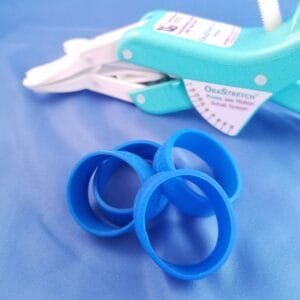
The OraStretch® Press Rehab System from Total TMJ is an essential device for TMD patients following surgery, helping to restore function and increase the range of jaw movement. Suitably sized for travel, the OraStretch® Press is simple yet effective, with versions available for children, edentulous patients, limited oral openings and over-/under-jet patients for an all-encompassing experience.
TMJ surgery can reduce chronic pain and discomfort, allowing patients to eat, speak and socialise with greater confidence and comfort.
[i] Wan, J., Lin, J., Tingfeng Zha, Ciruela, F., Jiang, S., Wu, Z., Fang, X., Chen, Q. and Chen, X. (2025). Temporomandibular disorders and mental health: shared etiologies and treatment approaches. The Journal of Headache and Pain, 26(1). doi:https://doi.org/10.1186/s10194-025-01985-6.
[ii] NHS Choices (2020). Temporomandibular disorder (TMD). [online] NHS. Available at: https://www.nhs.uk/conditions/temporomandibular-disorder-tmd/.
[iii] Jewell, T. (2019). What to Expect from TMJ Surgery. [online] Healthline. Available at: https://www.healthline.com/health/tmj-surgery#questions-for-healthcare-provider [Accessed 20 Nov. 2025].
[iv] Jewell, T. (2019). What to Expect from TMJ Surgery. [online] Healthline. Available at: https://www.healthline.com/health/tmj-surgery#questions-for-healthcare-provider [Accessed 20 Nov. 2025].