
 Remote working is now very common. The COVID-19 pandemic encouraged this, with remote working increasing from around 5% to nearly 40% at its peak. Now, roughly 22% work from home at least one day per week.[i]
The effects of remote working on health have been widely explored, but not so much on the stomatognathic system. However, there is a growing amount of evidence that there is a link between continuous postural changes and an increase in temporomandibular disorders (TMD).
Home working environments aren’t always made to match the ergonomic standards of offices or other work settings. Many setups are improvised, with people putting laptops on desks that are too low. This encourages neck strain and poor alignment. As laptops combine both screen and keyboard, it’s also difficult to maintain a neutral posture.
Even when monitors are used, they’re not always set up correctly. Screens that are too low tilt the head forward, increasing strain through the neck.
Seating is another key factor. One study reported that only 58% of individuals working from home use a proper office chair. 27% use dining chairs and 15% work from beds or sofas.[ii] Without adequate lumbar support, they’re more likely to slouch, moving the head forward. This shift can alter mandibular positioning and increase pressure on the temporomandibular joints (TMJ).[iii]
These aren’t that problematic short-term. However, over long periods, they place continuous load on the muscles and joints involved.
It has been shown that for every inch the head moves forward from a neutral position, the load on the cervical spine increases significantly.[iv] As the function of the TMJ is closely linked to the position of the head and spine, these postural changes can influence the lower jaw’s resting position and patterns of muscle activity. [v]
As well as physical changes, remote working has altered daily routines. There is less of a separation between work and personal environments. This leads to longer periods of uninterrupted focus. Natural breaks are reduced, and parafunctional habits like clenching when concentrating may become more frequent, increasing fatigue and discomfort.
Reduced verbal interaction throughout the day may also play a role. With less speaking, jaw movement decreases, which can contribute to stiffness. In addition, work-related stress can increase overall muscle tension. Combined with postural strain, this creates conditions that may increase the likelihood of developing TMD.
Patients may not initially show clear signs of TMD. Symptoms usually develop gradually, with common early indicators including jaw fatigue, headaches, [vi] and general discomfort. Pain can also extend beyond the jaw, with some individuals feeling discomfort in the shoulder and neck region.[vii]
Joint sounds may develop over time, although they are not always present in early stages. Identifying these patterns early is important in preventing progression.
Dental professionals should consider discussing posture and working habits with patients. Simple adjustments to working environments, like improving screen height and seating support, can help reduce strain.
The OraStretch® Press Rehab System from Total TMJ is a great option for patients experiencing TMD. Designed to support gradual improvement in jaw mobility, it offers a simple way to help restore function. The system is available in a range of adaptations, including options for children, edentulous patients, and those with limited oral opening, making it suitable for many.
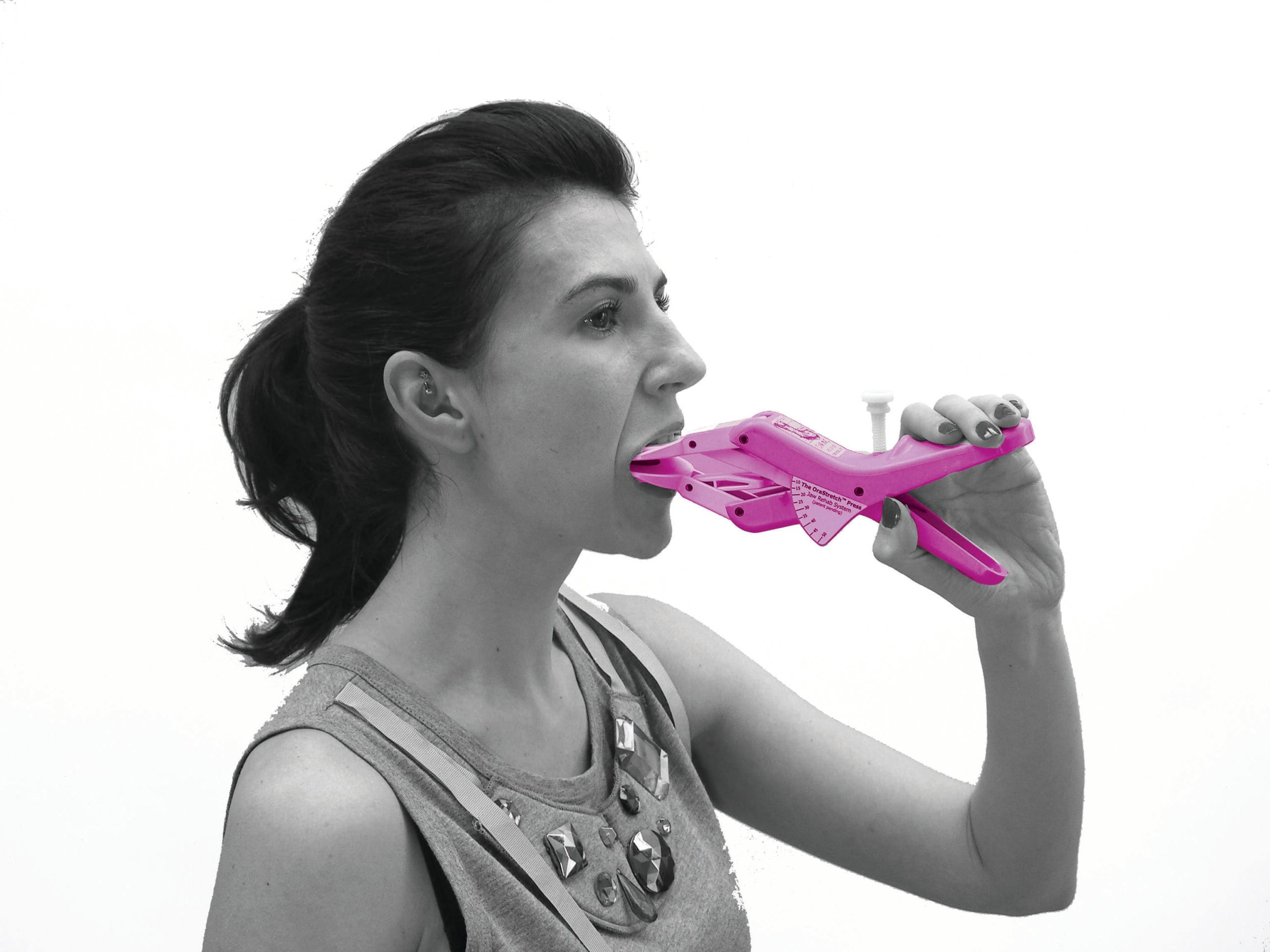 As remote working continues to grow, dental professionals have an important role in helping patients with certain health impacts. Offering guidance on daily habits and tools can help reduce the risk of longer-term complications, supporting comfort and overall wellbeing.
[i] https://post.parliament.uk/research-briefings/post-pb-0049/
[ii] Davis KG, Kotowski SE, Daniel D, Gerding T, Naylor J, Syck M. The Home Office: Ergonomic Lessons From the “New Normal”. Ergon Des. 2020;28(4):4-10. doi: 10.1177/1064804620937907. PMID: 40963944; PMCID: PMC12439588.
[ii] Fernández-de-las-Peñas C, Alonso-Blanco C, Cuadrado M, Pareja J. Forward Head Posture and Neck Mobility in Chronic Tension-Type Headache: A Blinded, Controlled Study: A Blinded, Controlled Study. Cephalalgia. 2006;26(3):314-319. doi:10.1111/j.1468-2982.2005.01042.x
[iv] Naresh-Babu J, Arun-Kumar V, Raju DGS. Surgeon’s Neck Posture during Spine Surgeries: “The Unrecognised Potential Occupational Hazard”. Indian J Orthop. 2019 Nov-Dec;53(6):758-762. doi: 10.4103/ortho.IJOrtho_677_18. PMID: 31673178; PMCID: PMC6804392.
[v] Olivo, S. A., Bravo, J., Magee, D. J., Thie, N. M., Major, P. W., & Flores-Mir, C. (2006). The association between head and cervical posture and temporomandibular disorders: a systematic review. Journal of orofacial pain, 20(1).
[vi] Wan, J., Lin, J., Tingfeng Zha, Ciruela, F., Jiang, S., Wu, Z., Fang, X., Chen, Q. and Chen, X. (2025). Temporomandibular disorders and mental health: shared etiologies and treatment approaches. The Journal of Headache and Pain, 26(1). doi:https://doi.org/10.1186/s10194-025-01985-6.
[vii] Mehndiratta A, Kumar J, Manchanda A, Singh I, Mohanty S, Seth N, Gautam R. Painful clicking jaw: a pictorial review of internal derangement of the temporomandibular joint. Pol J Radiol. 2019 Dec 23;84:e598-e615. doi: 10.5114/pjr.2019.92287. PMID: 32082459; PMCID: PMC7016362.